
Web apps and SaaS
Web app and SaaS design and development, with the code in your own repository.
What a web app build covers
This suits a product you sell, a marketplace or search-heavy tool, or a process that has outgrown spreadsheets. If a SaaS tool does the job at your size, buy that instead. We build for the browser, on desktop and phone, and do not build native iOS or Android apps. We are a team of 10, so a programme that needs dozens of developers belongs with a larger firm.
Product design
The first version agreed in writing, its main tasks mapped, and every key screen in Figma with empty, loading and error states.
Design system
Components and states your developers can reuse, for teams that build the product themselves.
Front end
Screens built from the approved designs and tested on a phone.
Back end and data
The databases, user roles, admin tools and search a product runs on, plus payments, email and CRM connections.
Taking over an app
An app from another team or an AI tool starts with a review, in writing, before you commit.
Testing and hosting
Tests on the core flows, then hosting, monitoring and backups in your account.
SaaS tool, first version or redesign?
Standard jobs such as invoicing, CRM or a help desk, where good tools already exist.
You work the way the tool works, and seat fees grow with your team.
Testing an idea, or internal tools for a few users.
Limits on speed, permissions and data appear as use grows, and moving off later usually means a rebuild.
A minimum viable product: a new product built around a few core tasks.
A tight first scope ships sooner, so we will push nice-to-have screens to version two.
A product you sell, or a process that sets you apart and has to fit exactly.
It takes more to build and needs looking after: Next.js alone began scheduled security releases in July 2026.
A live app with customers and data, where users struggle.
We change the worst screens first, so users never open a whole new app one morning.
What we built for HeavyParts.ai
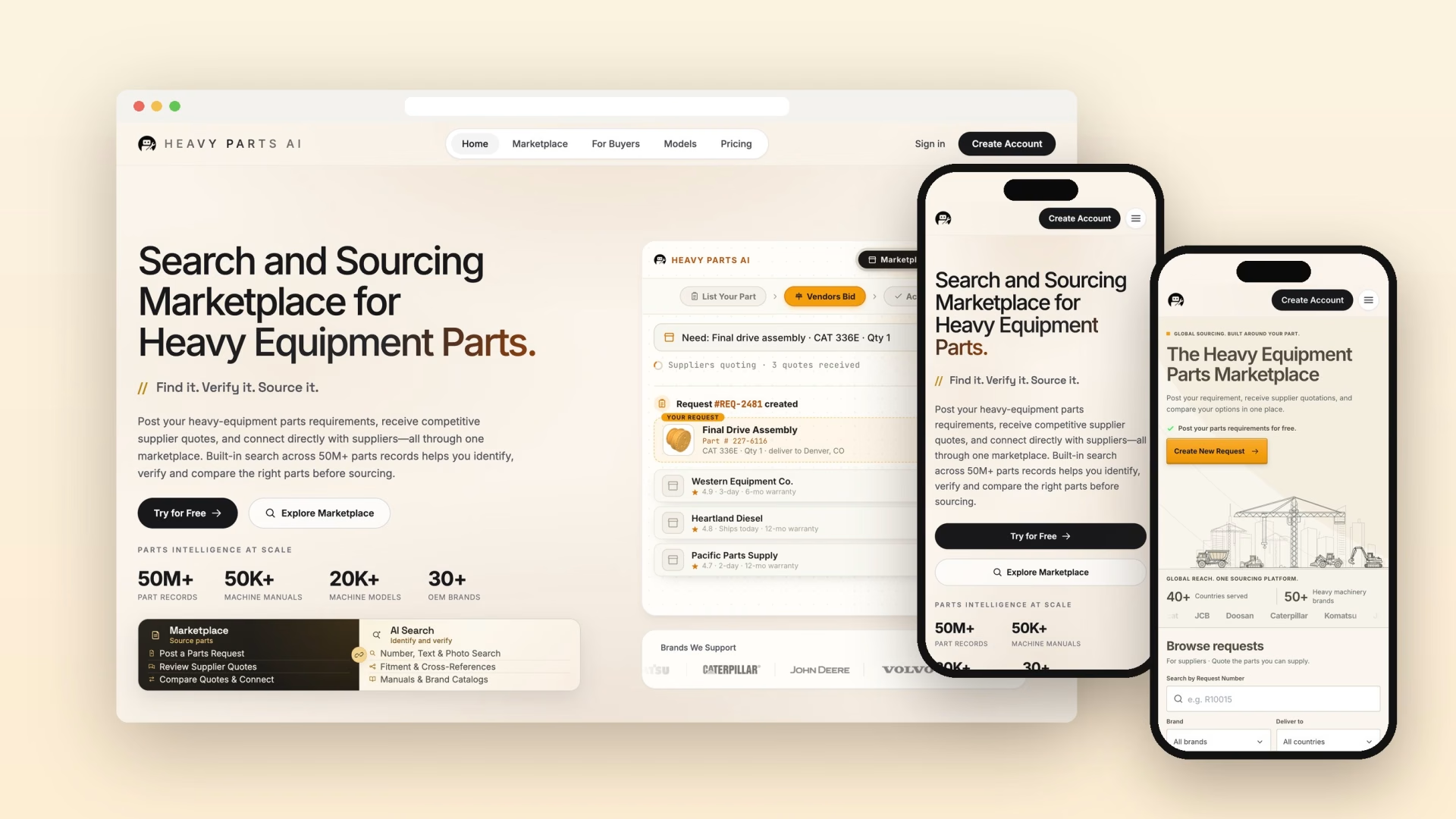
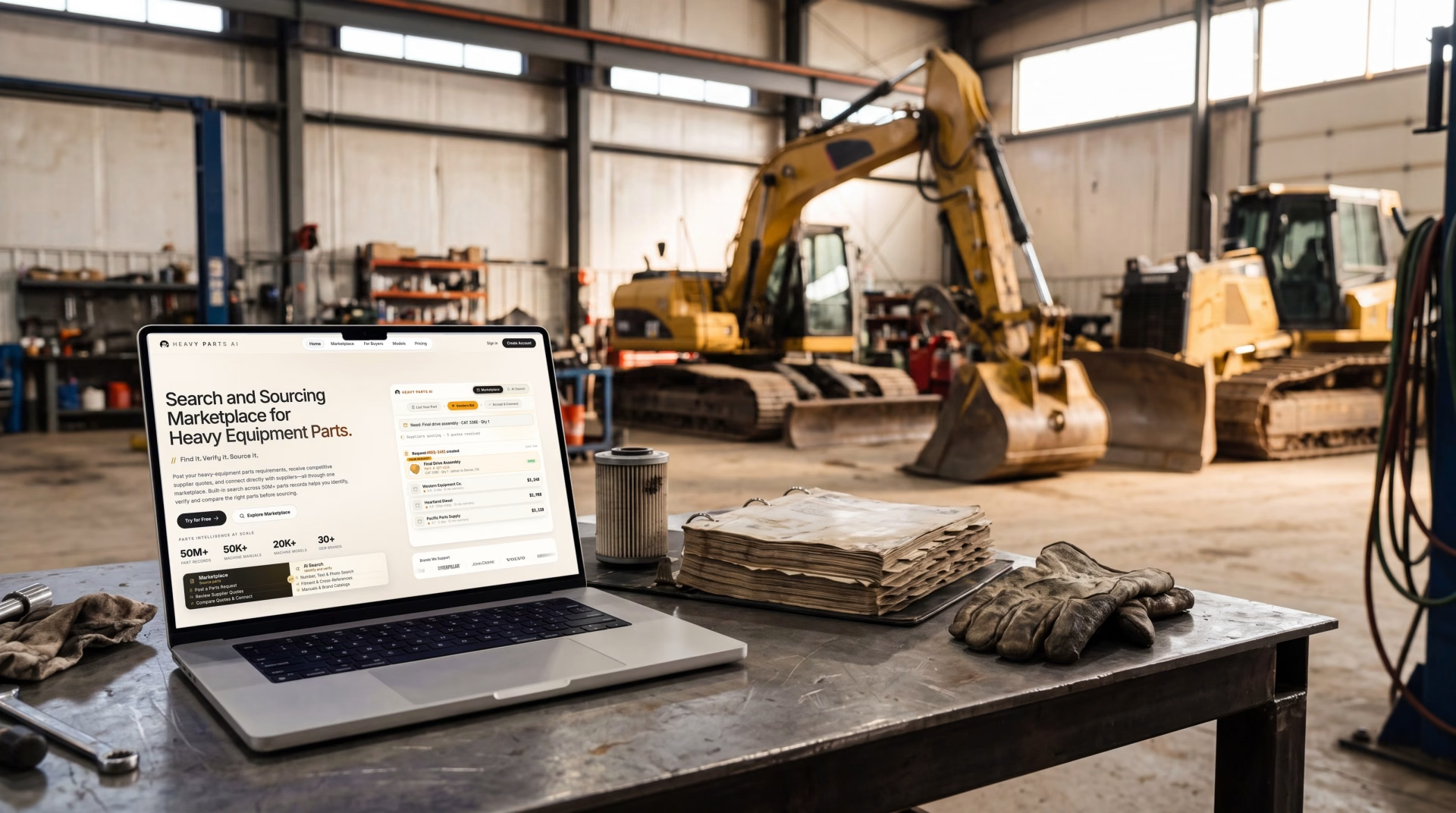
Our proof here is one product, in depth: an AI search and sourcing marketplace for heavy equipment parts. The figures are those shown on heavyparts.ai in November 2026. We have delivered Laravel apps for clients too, and those stay private.
Read the case studyKrikir Technologies helped us turn a complex idea into a complete AI-powered platform. Their technical understanding and commitment throughout the development process have been impressive. Great team to work with.
Talk it through on a call
We look at what you have now and what you want it to do.
We tell you how we would do it and who would work on it.
You get a fixed quote in writing after the call, with nothing to sign until you are ready.
How a web app project runs
You approve the scope, then the prototype, then each release. The team works from India, so each build goes to a staging link you can test without us online, and the booking page shows call times in your own time zone.
Call and fixed quote
Users, main flows and data talked through, then a written scope and a fixed quote for the first version.
Product design
The main screens and flows in Figma, clicked through with you and approved before development.
Build on staging
Working software on a staging link. You can reorder priorities within the agreed scope.
Testing and security
Tests on the core flows, a dependency audit and access rules checked. You approve the release.
Launch and handover
Deployed to hosting in your account, with monitoring and backups set up and the first users watched.
What you own when the app is handed over
The repository, the hosting and the service accounts sit in your name. The code, the Figma files, the prototype and the component library are transferred to you on final payment, under the contract, and we expect your lawyer to read that clause. The fixed quote depends on user roles, integrations, data size and whether we start fresh or take over.
Other pages for product teams
Web app and SaaS questions
Quotes, ownership, design and working with a team in India.

Book a 30-minute call
The fixed quote covers a written scope of the first version, and it follows one call. It depends on user roles and screens, integrations, data size, any user sessions and whether we start fresh or take over an app. It holds because the scope is written down. You can reorder priorities inside it, and anything new is quoted before work starts.
The code, IP and design files are transferred to you on final payment, under the contract. The repository and hosting sit in accounts in your name, so another team can pick up the work. Have your lawyer read that clause before you sign.
Real code. We keep it small by leaving features out, and the next version builds on it. If an idea still needs testing, a no-code tool may be the better first step, and we will say so.
We do both: we designed and built HeavyParts.ai, a parts marketplace with 50M+ searchable part records. If you have your own developers, we hand over the Figma files, the component library and notes for each screen, and answer questions while they build.
Yes, and we start with a written review of the code, hosting and security. Apps built with AI tools can look finished and still have gaps behind the screens. Broken access control tops the 2025 Top 10 from OWASP, the web security body, so that is where the review starts. You read it before you commit to further work.
A team in India works well when decisions are written down. Most design review happens in comments on the Figma file, and you get a staging link to test at your own hour. For live calls, the booking page shows call times in your own time zone. Data handling for your app is agreed in writing before any real data is used.








Let's talk about your next project
Book a 30-minute call or send a brief. A founder replies within one working day.